High tech, low life

Cyberpunk, taken apart and put back together

Gibson's Sprawl and Ridley Scott's Los Angeles fixed the vocabulary; almost everything since has been homage, argument or correction. These pages work through the genre strand by strand — what each medium does that the others cannot, where the lineages split, and which entry point actually suits what you already like.

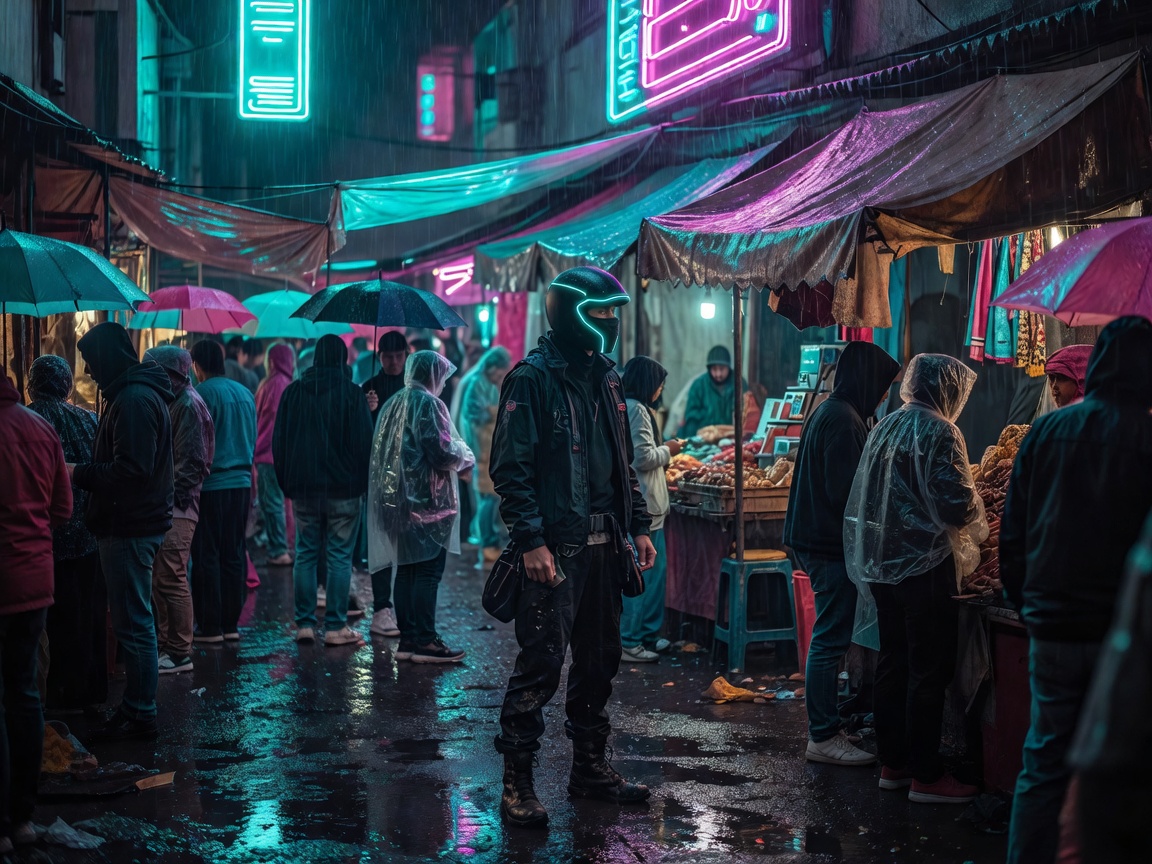
Rain-slick city street at night lit by cyan and magenta signage above crowded market stalls

Games

The immersive sim spine from System Shock through Deus Ex, the tabletop rules that gave the genre its jargon, the adventure and visual-novel branch that Snatcher started, and the open-world arrivals that came much later. Where each lineage rewards you, and where it does not.

Open the games guide

Film & Anime

Two traditions that borrowed from each other for decades: live-action noir descended from Blade Runner, and the Japanese animation line running through Akira, Ghost in the Shell and the television series that followed. Different questions, different pacing, same wet streets.

Open the screen guide

Books

The prose that came first. Dick and Brunner as precursors, the Mirrorshades group as a movement with a manifesto, Stephenson turning the register comic, and the postcyberpunk writers who kept the plumbing and dropped the leather. Reading orders that make sense.

Open the reading guide

Aesthetic

Why the look holds up: retrofitted architecture, signage as weather, the density borrowed from Hong Kong and Tokyo, mirrorshades and technical outerwear, and the synth, industrial and ambient scores that taught the genre how to sound.

Open the style guide

Themes

Corporations with their own jurisdiction, machine minds that may or may not be people, surveillance as infrastructure, bodies as platforms, and rebellion that keeps getting bought. The arguments underneath the neon, and the subgenres that formed in reaction.

Open the themes guide

The through-line

What holds the genre together

High tech, low life

The four-word summary that has outlasted every academic definition. Advanced technology is ordinary, cheap and everywhere; the people using it are not the people who own it. Strip that inversion out and you have science fiction with better lighting, not cyberpunk.
Misuse as method

Gibson's line about the street finding its own uses for things, from the short story "Burning Chrome", is the genre's working principle. Hardware is repurposed, protocols are abused, medical implants become tools. The plot usually starts when somebody uses a system in a way its designers never priced in.

Two lineages, one skyline

Anglophone noir and Japanese manga and animation fed each other continuously. Blade Runner's production design absorbed East Asian urban density; Akira and Ghost in the Shell absorbed the noir back and pushed it towards questions about consciousness that the live-action films largely avoided.

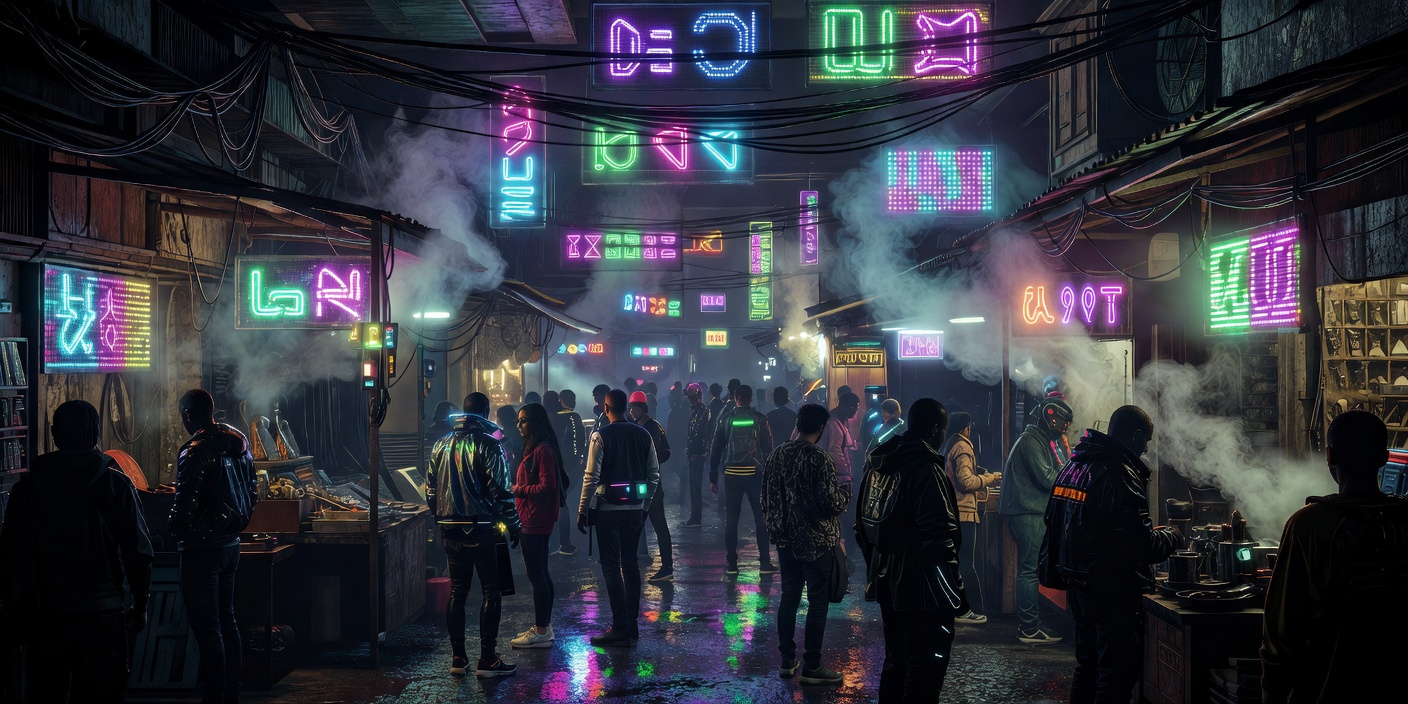
Narrow covered market alley crowded with layered signage, cabling and vapour under coloured light
Density, layering and retrofit: three qualities the genre's best-known cityscapes share, whatever the medium.

Where the edges are

Plenty of work gets filed here that does not belong. Post-apocalyptic settings usually lack the functioning corporate order that cyberpunk needs to push against. Space opera moves the frame off Earth and loses the street. Purely retro-futurist design without the class politics is an aesthetic borrowing, which is fine — just not the same thing.

How to use these pages

Each guide stands alone and assumes you know the basics. If you want the argument first, start with themes. If you want something to play, read or watch tonight, the games, screen and books pages each end with selection criteria rather than a ranking — the point is to match a work to what you want from it.