Themes
The arguments underneath the neon
Cyberpunk is not pessimistic about technology. It is pessimistic about ownership. Almost every recurring theme in the genre resolves into the same question: when a capability becomes available, who ends up controlling it, and what does everyone else have to do to work around them?
Corporate sovereignty
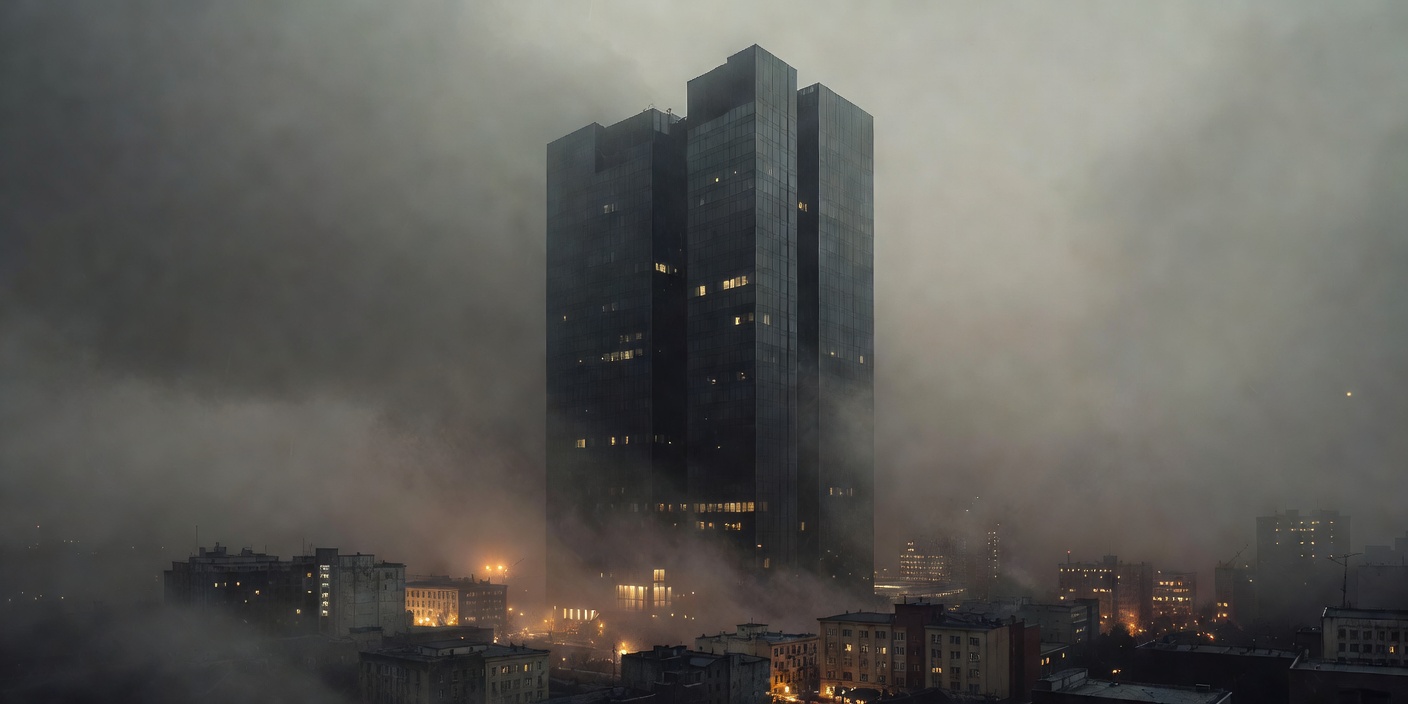
The genre's corporations are not simply large companies. They function as sovereign entities: they hold territory, run armed security, issue identity, employ their own courts and negotiate with states as peers. That premise is what generates the plots. If a corporation can be sued, you have a legal drama. If it cannot, because the courts that would hear the case are on its payroll, the only remaining options are theft, sabotage and exposure — which is why so much cyberpunk fiction is structured as a heist or a leak.
The tabletop rules make this explicit by giving corporations extraterritorial status in the setting, and the fiction usually shows it through small details rather than exposition: a security officer who cannot be arrested by city police, a district where a company logo replaces a street sign, a medical procedure that only your employer can authorise. Note how often employment is the real bond in these stories. The characters at the centre are usually contractors, deniable and uninsured, which is a labour arrangement long before it is a plot device.
Machine minds and personhood
The genre's artificial intelligences are rarely interesting as threats. They are interesting as legal problems. A mind that can be copied breaks the assumption that a person is singular; a mind that was built breaks the assumption that a person is born; a mind that is owned breaks everything else. Dick's androids, Gibson's constrained AIs, Shirow and Oshii's networked consciousness, and the manufactured servants of later animation all circle the same question from different angles: personhood is not a property that can be detected, it is a status that has to be granted, and granting it costs somebody money.
The strongest work in this vein refuses to settle the question. Blade Runner's ambiguity about its own protagonist is doing that job; Ghost in the Shell's ending relocates the question rather than answering it. Where a story does settle it — usually by proving that the machine has feelings — it tends to lose the political charge, because the interesting version is not whether an AI can suffer but who has the authority to decide whether that suffering counts.
A distinction worth holding onto: stories about a superintelligence deciding humanity's fate are usually not cyberpunk. Cyberpunk's machine minds are embedded in commerce and law, with owners, licences and liabilities. The scale is smaller and the stakes are jurisdictional.
Surveillance as infrastructure
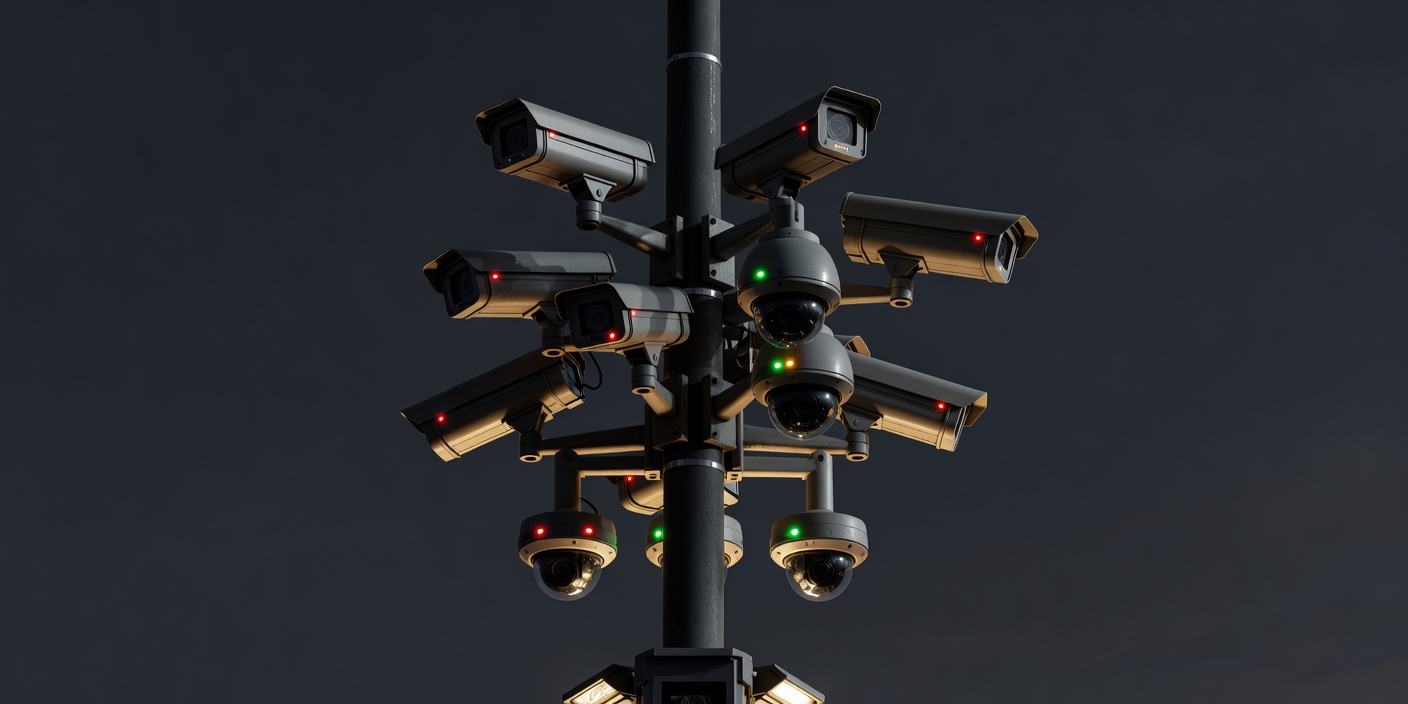
Early in the genre, surveillance was a threat from a specific watcher. Later it becomes the environment itself: cameras, transit records, purchase histories, biometric gates and behavioural scoring, none of them operated by a villain, all of them aggregating. That shift changed the shape of the plots. When observation is ambient, the resistance is not hiding from an enemy but managing your own legibility — forged identity, cash, gait, throwaway hardware, staying off networks that infer more than they record.
Psycho-Pass makes the scoring literal; Watch Dogs makes aggregation a game mechanic; Doctorow's fiction works through the civil-liberties arguments in detail. What all of them recognise is that the seductive part of surveillance is convenience. Systems that watch you also serve you, and the genre is at its sharpest when it shows characters accepting that trade because the alternative is being locked out of ordinary life.
The body as a platform
Augmentation is the genre's most recognisable image and its most consistently pessimistic theme. Prosthetics, neural interfaces, sensory replacements and combat modification are almost never presented as straightforward improvement. They are financed, they need servicing, they can be repossessed, and they carry a psychological cost that the tabletop games encode as a spendable resource. Underneath that is a labour argument: if a job requires modification, and the modification requires debt, the worker's body becomes collateral.
There is a genuine tension here that the genre has never resolved. Read one way, the recurring narrative of augmentation-as-loss reads as suspicion of disabled and modified bodies. Read another, it is a critique of the finance around them rather than of the technology. The works that hold up best are the ones that keep the distinction visible — where the horror belongs to the contract and the clinic, not to the prosthesis.
The street, and its uses
The counterweight to all of the above is improvisation. Gibson's formulation — the street finds its own uses for things — describes a world where the capabilities that corporations build for profit get repurposed by people who could never have commissioned them. Pirate clinics, scavenged components, cracked firmware, informal markets, mutual aid inside a gig economy. This is the genre's residual optimism, and it is not a small one: it insists that control of a technology is never total, because use is harder to police than production.
Rebellion, and its resale value
Cyberpunk's most self-aware theme is the co-option of dissent. The punk half of the name promises opposition, but the genre keeps showing how quickly opposition becomes a product: the underground bar with corporate ownership, the outlaw hacker recruited as security, the protest aesthetic sold back as clothing. That is also the honest criticism of the genre itself — its imagery is now a marketing palette, which is precisely the outcome its stories predict.
Two reactions grew out of that. Postcyberpunk keeps the technology and drops the assumption that the system is beyond repair, putting protagonists inside institutions they are trying to fix. Solarpunk goes further and rejects the premise, building settings around ecological repair and distributed abundance rather than corporate enclosure. Both are best understood as arguments with cyberpunk rather than departures from it — they inherit the same question about ownership and answer it differently.
Reading the genre now
The useful move is to stop treating cyberpunk as prediction. Very little of its technical forecasting is the point, and the parts that landed did so by accident. What holds up is the analytical frame: follow the ownership, ask who pays for the interface, notice who is a contractor and who is staff, and check whether the story lets its institutions be reformed or only robbed. Apply that reading to any of the works in the games, screen and reading guides and you will find the same skeleton underneath very different surfaces.